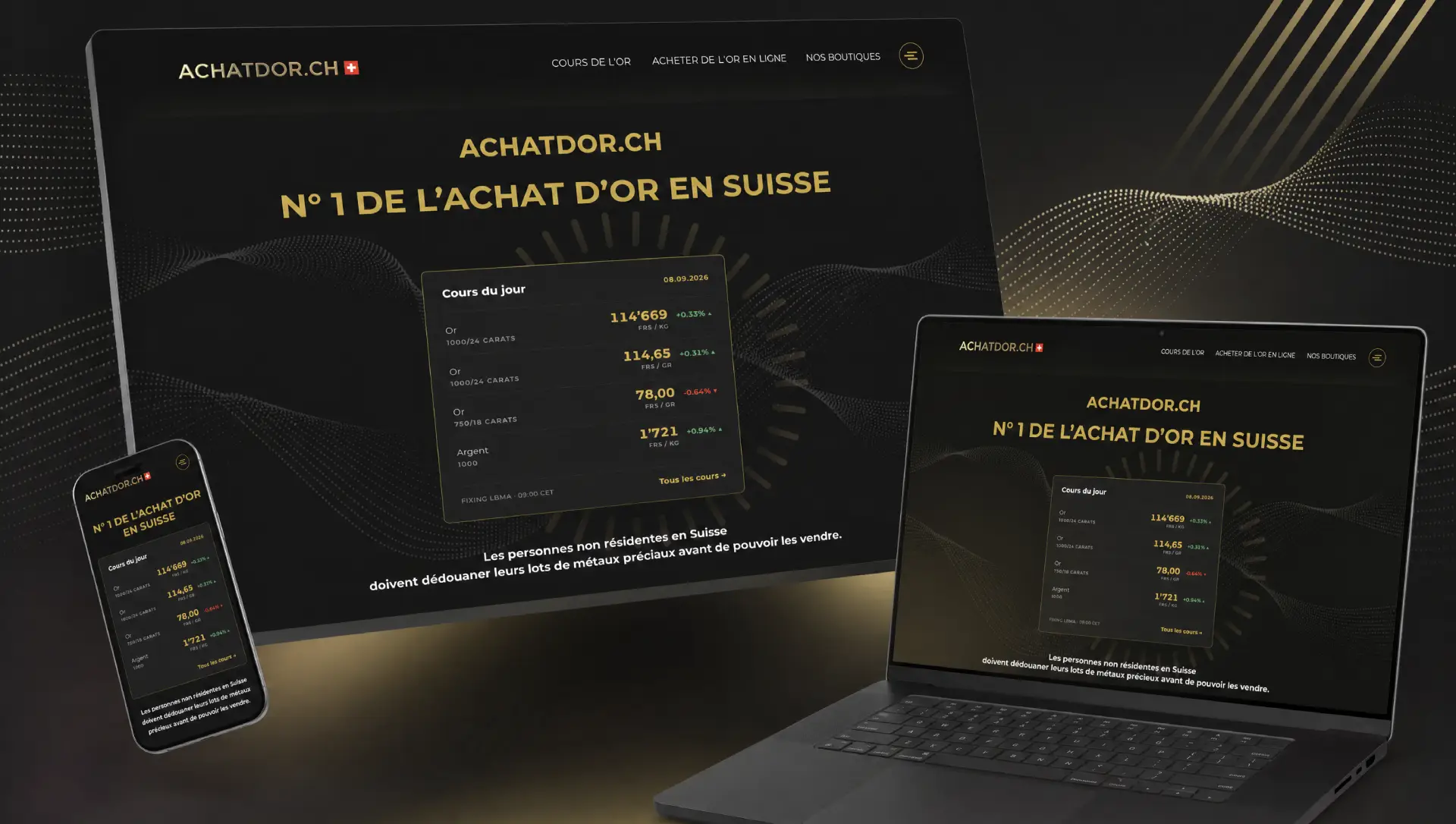
Four domains, four languages: an architecture built so that a search for "buying gold Geneva" finds the right shop, and so that the AI assistants quote the brand accurately.
Buying gold is searched for locally: people type the metal and the name of their town. So the brand had to be found town by town, in the country's four languages, rather than listed once for the whole of Switzerland.
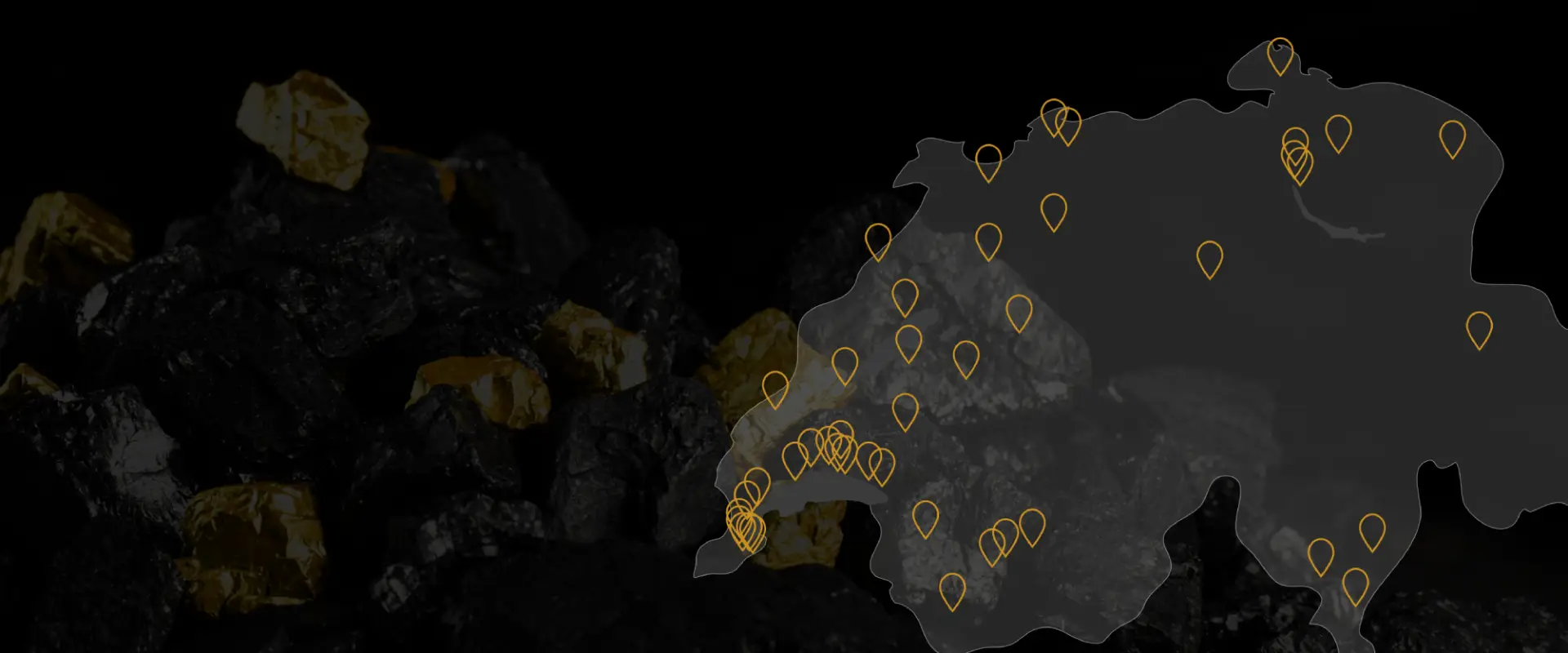
We set up four domains, one per language, the semantic structure that goes with them, the expert content and thirty geolocated campaigns. All of it measured on the searches that actually bring someone into a shop.
One domain per language, not one site with extensions
A single site in four languages would have been easier to keep and harder to find. Each region searches with its own words, its own towns and its own habits. A dedicated domain lets you speak that language right down to the address, and be judged on that one market rather than diluted across three others.
The set-up
4 domains
one per language: achatdor.ch, kaufengold.ch, orocompro.ch, buyinggold.ch.
30 campaigns
geolocated, one per catchment rather than one for the whole country.
4 assistants
ChatGPT, Gemini, Perplexity and Copilot, recorded in all four languages.
What we took on
Multisite architectureFour domains, four semantic structures, one single method.
Optimisation for AIStructured data in Schema.org and JSON-LD, semantic maps by subject.
Content that carries authorityPrice guides, specialist FAQs and glossaries, backed by links that were earned.
Google AdsThirty geolocated campaigns, steered by catchment rather than nationally.
Found town by town
“Buying gold Geneva”, “buying gold Nyon”: those are the searches that fill a shop, not the generic ones. So each town has its page, its proof and its rank tracking, in the language of its region. On those searches the brand now sits in first place.
A page per town and per canton, written for the region and not duplicated
Price guides and glossaries that answer before the call
Structured data laid page by page: organisation, shops, opening hours, questions
Links earned from sources someone actually reads
A monthly record of positions and citations, language by language
Nobody searches for “gold”. They search for “buying gold” and the name of their town.
ABiL MEDiAS
What it showed
A local business does not have to become national to be found everywhere: it has to be local four times over, and cleanly. And the same foundations serve both engines, the one that ranks pages and the one that cites sources: a clean structure, verifiable claims, consistency from one language to the next.
Frequently asked questions
Because a single site would have been simpler to keep and worse to find. Each region searches with its own words, its own towns and its own habits. A dedicated domain lets you speak that language all the way into the address, and be judged on that one market rather than diluted across three others.
The ones that fill a shop, not the generic ones. "Buying gold Geneva", "buying gold Nyon": the metal plus the name of the town. Each town has its page, its evidence and its rank tracking, in the language of its region — and on those searches the business now sits in first place.
The first signs appear after three months of work. A result you genuinely feel does not arrive before six months. And if you do not stop there, the effect compounds: positions become steadier and hold for longer.
Less than people say, and that is good news: the foundations are the same. A clean structure, checkable claims and consistency from one language to the next serve the engine that ranks pages as well as the one that quotes sources. We record positions and citations every month, language by language.
A page per town and per canton, written for the region and not duplicated; price guides and glossaries that answer before the phone call; structured data laid down page by page — company, shops, opening hours, questions; links from sources somebody actually reads; and a monthly record of positions and citations.
No. It is worth it when the markets search differently and are measured separately — which is the case for a physical shop judged town by town. For a business selling the same thing everywhere in the same way, a well-structured multilingual site is enough and costs less to keep.